
A Lesson I Learned After Buying a Boutique
“Why is my boutique not profitable?”
I asked myself that exact question when I purchased a boutique several years ago.
Sales were happening.
Customers were coming in.
Clothing was leaving the racks.
But when I looked at the numbers, something didn’t make sense.
The boutique wasn’t making the profit it should have been.
At first it was confusing. If merchandise was selling, why wasn’t the store more profitable?
Then I discovered the real problem.
Most of the sales weren’t happening at full price.
Merchandise was being marked down far too early. Items were quickly moved to sale racks or clearance just to make them sell faster.
Because of this, customers began to expect it.
Many shoppers stopped buying items at full price and started waiting for the markdowns. Over time, the boutique unintentionally trained customers to shop the sale rack instead of the sales floor.
The result?
Sales numbers looked healthy, but profit margins were shrinking.
That experience taught me something important:
Boutiques rarely struggle because they can’t sell merchandise.
They struggle because small operational issues quietly drain profit over time.
If you fix these three areas, you can dramatically improve your boutique’s profitability.
1. Inventory That Doesn’t Turn
(Cash Sitting on the Rack)
The biggest hidden problem in boutiques is inventory that sits too long.
Many boutique owners believe that offering more styles will lead to more sales. But inventory is not just merchandise — it is cash.
Example
| Item | Cost | Units | Total Cash |
|---|---|---|---|
| Sweater | $25 | 40 | $1,000 |
If those sweaters sit on the sales floor for 90 days, that means $1,000 of your cash is trapped in inventory.
Now multiply that across your entire store. Many boutiques unknowingly have:
$20,000–$50,000 tied up in slow-moving merchandise.
When inventory sits too long, several things happen:
• markdowns begin
• clearance racks grow
• profit margins shrink
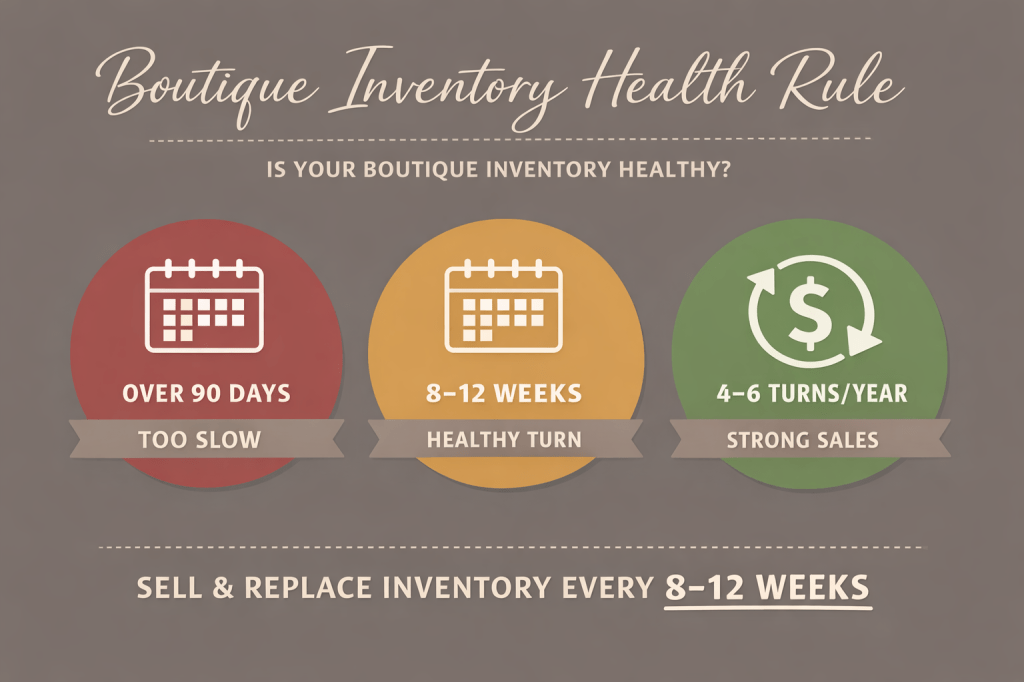
Healthy Boutique Benchmark
Profitable boutiques typically aim for:
Healthy boutiques typically sell through and replace their inventory 4–6 times per year, meaning most merchandise sells and is refreshed with new styles every 8–12 weeks.
That means your inventory sells and is replaced several times annually, keeping cash flowing back into the business.
2. Discounting Merchandise Too Early
Another common profit leak is discounting products too quickly.
When something doesn’t sell immediately, many boutique owners panic and start marking items down.
But early discounts dramatically reduce profit.
Example
| Retail Price | Cost | Profit |
|---|---|---|
| $60 | $25 | $35 |
If that item is discounted 30% too early, the numbers change quickly.
| Sale Price | Profit |
|---|---|
| $42 | $17 |
The profit just dropped more than 50%.
When this happens across hundreds of items, a boutique’s profit margin can disappear.
A Better Markdown Strategy
Healthy boutiques typically follow a structured markdown timeline:
| Time on Sales Floor | Action |
|---|---|
| 0–30 Days | Full Price |
| 30–60 Days | Evaluate Sales |
| 60–90 Days | 20% Markdown |
| 90+ Days | Clearance |
This system allows inventory enough time to sell at full price before reducing margins.
One of the biggest lessons I learned is that inventory that doesn’t turn is very different from discounting merchandise too quickly.
Sometimes items truly need to be cleared out, but many boutiques mark products down long before they’ve had a fair chance to sell.
The difference comes down to having a clear inventory and markdown system instead of reacting too quickly.
This is why profitable boutiques rely on systems instead of guesswork.
3. Payroll Creep
The third major profit leak is something many owners overlook:
Payroll creep.
Payroll often grows slowly over time without the owner realizing it.
Common causes include:
• scheduling too many employees
• shifts that are too long
• employees staying late
• unnecessary overlap during slow hours
Example
| Sales | Payroll | Payroll % |
|---|---|---|
| $30,000 | $6,000 | 20% |
This is a healthy payroll range.
But if payroll creeps up:
| Sales | Payroll | Payroll % |
|---|---|---|
| $30,000 | $8,000 | 27% |
That extra $2,000 comes directly out of profit.
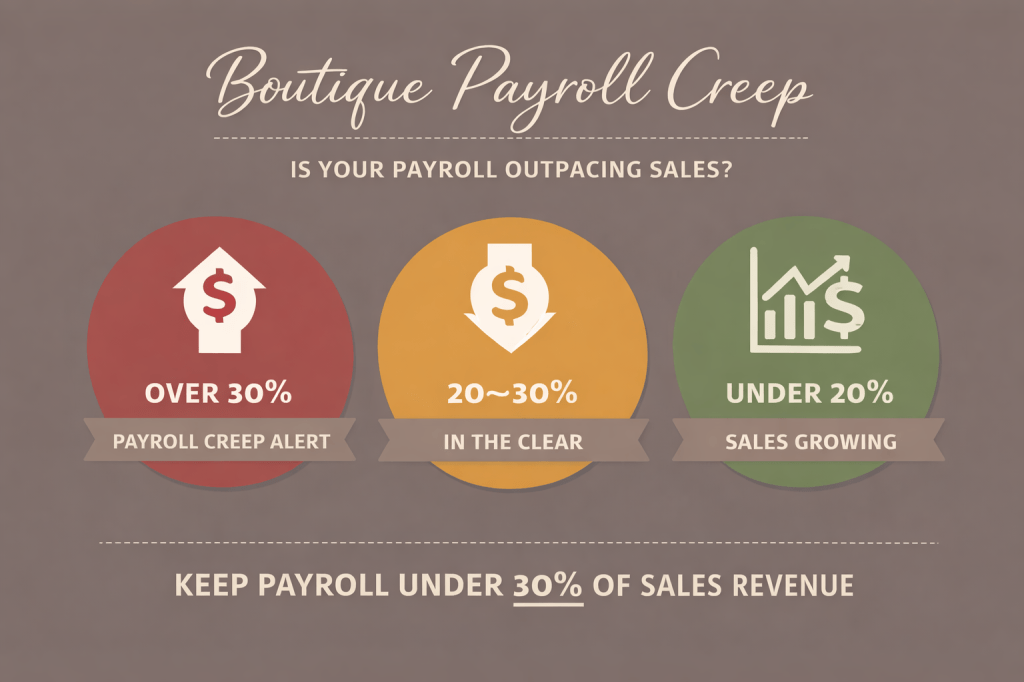
Healthy Boutique Benchmark
Most profitable boutiques keep payroll within:
15–20% of sales
When payroll rises above that level, owners often feel like they are working harder but making less money.
Final Thoughts
Boutique profitability is rarely about working harder or selling more products.
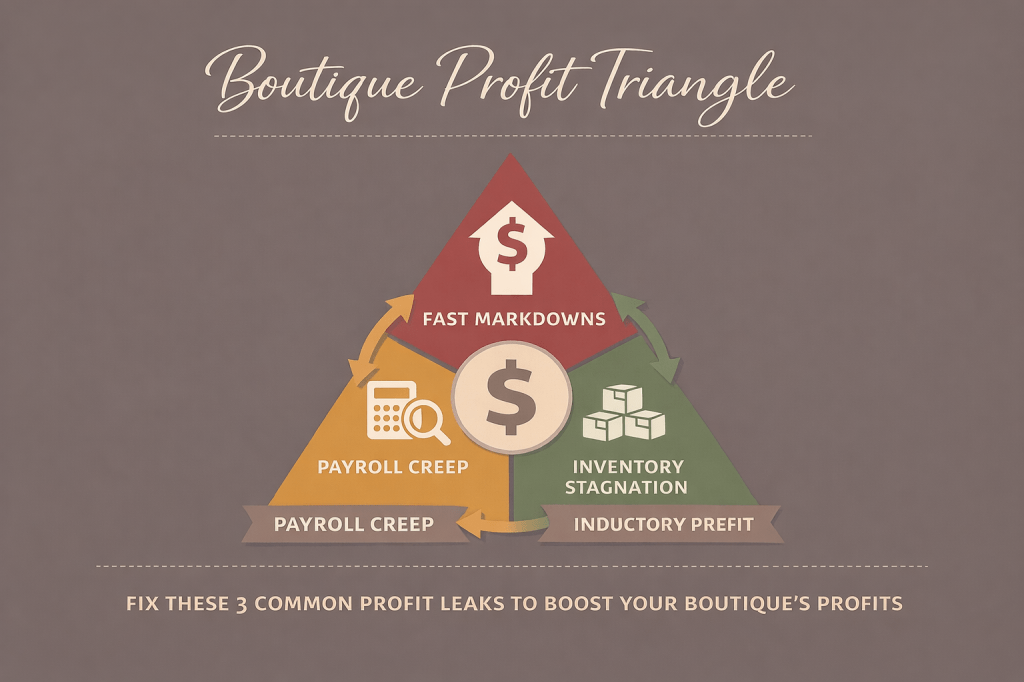
It usually comes down to controlling a few key systems inside the business:
• inventory management
• markdown strategy
• payroll control
When these systems are in place, boutique owners often see profit improve quickly.
When these systems are in place, boutique owners often see profit improve quickly.
36 hits


Leave a comment